Uncategorized

Upstairs Bathroom Details: The Saga of the Medicine Cabinet

The medicine cabinet is just about the only original fixture left in this bathroom. And even some of these pieces are replacements. Like the large flat piece that makes up the header. At some point, some P.O. decided that wide piece of wood was the optimal spot for a light fixture. Yeah. One of those eighties theatre dressing room numbers. So that piece of chestnut had to be completely replaced, as well as the piece that makes up the apron. That one suffered when the backsplash and new counter were installed. Yeah, I know the knobs don’t line up with one another, and it used to bug me, but there is no evidence of another hole on either door, so I guess they were always like that.
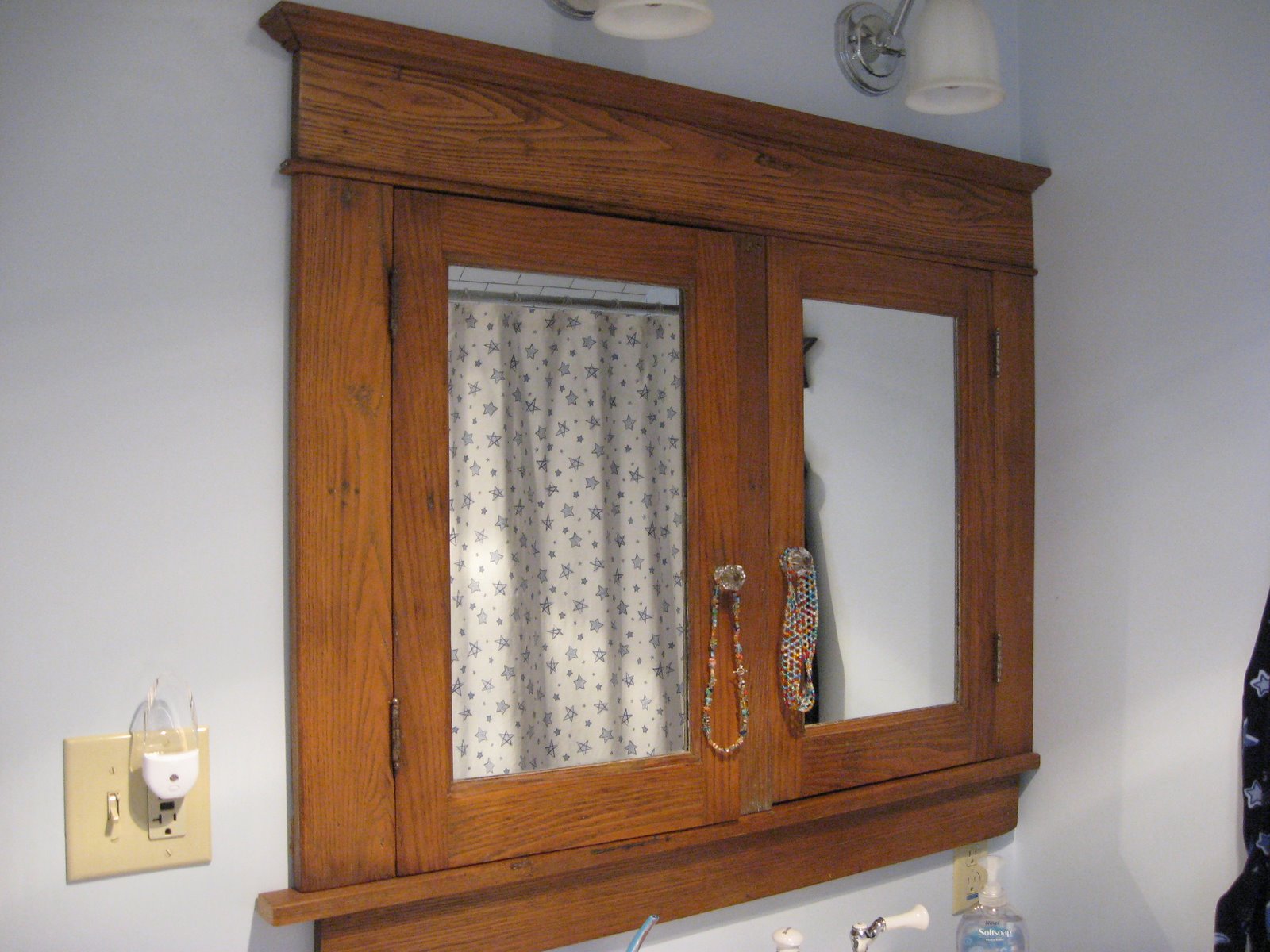
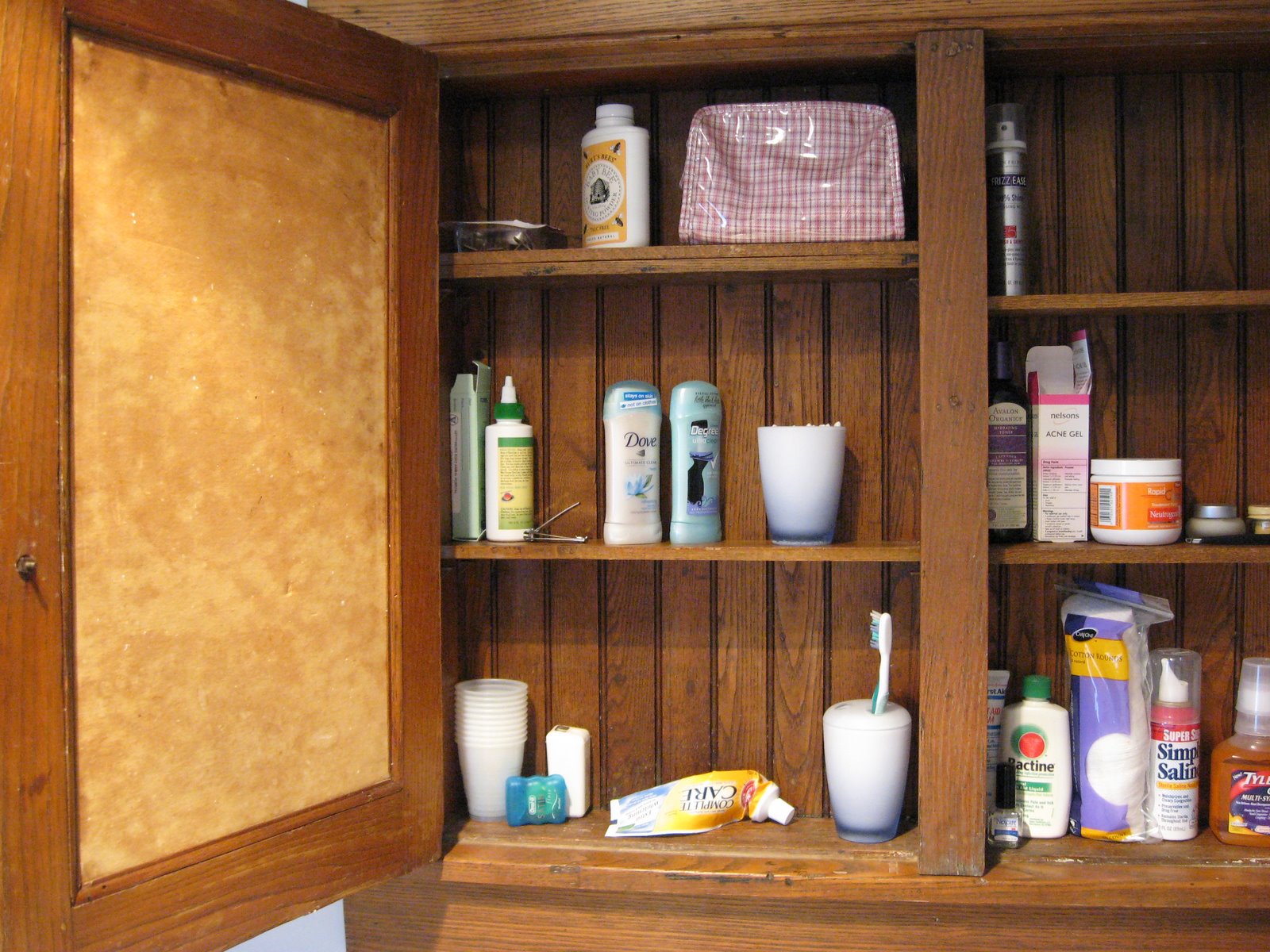
The back is made up of bead board- the real stuff.
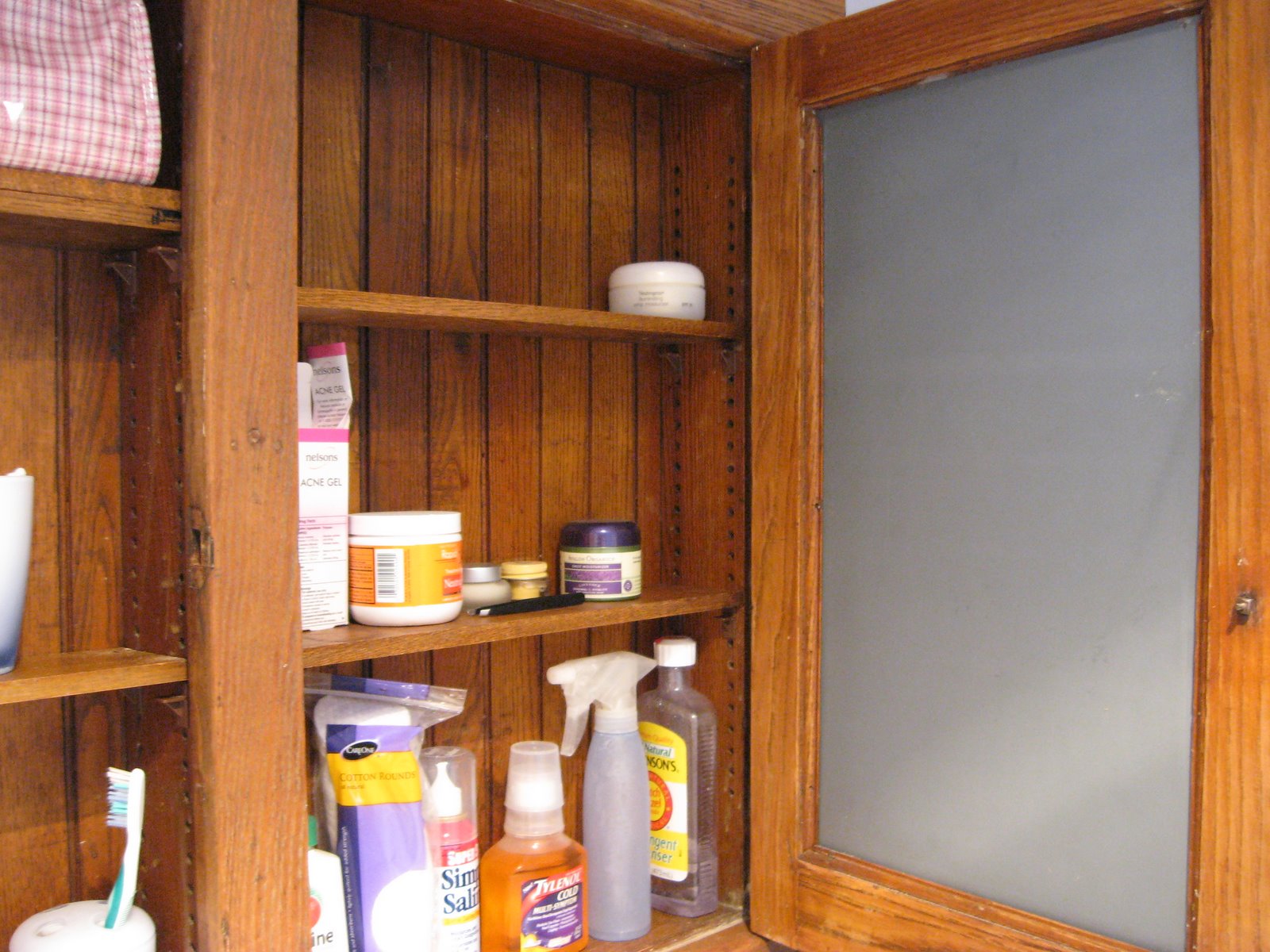
Small holes were drilled at (irregular) intervals for shelf supports. We’ve discovered the holes are an in-between size, too!

Seriously, though. I love this medicine cabinet. Now that it is all nicely refinished, it looks so nice in the room, all warm wood. Without it, I don’t think the bathroom would look as well-adjusted to the period of the house.
Uncategorized

House Tour: Front Bedroom After

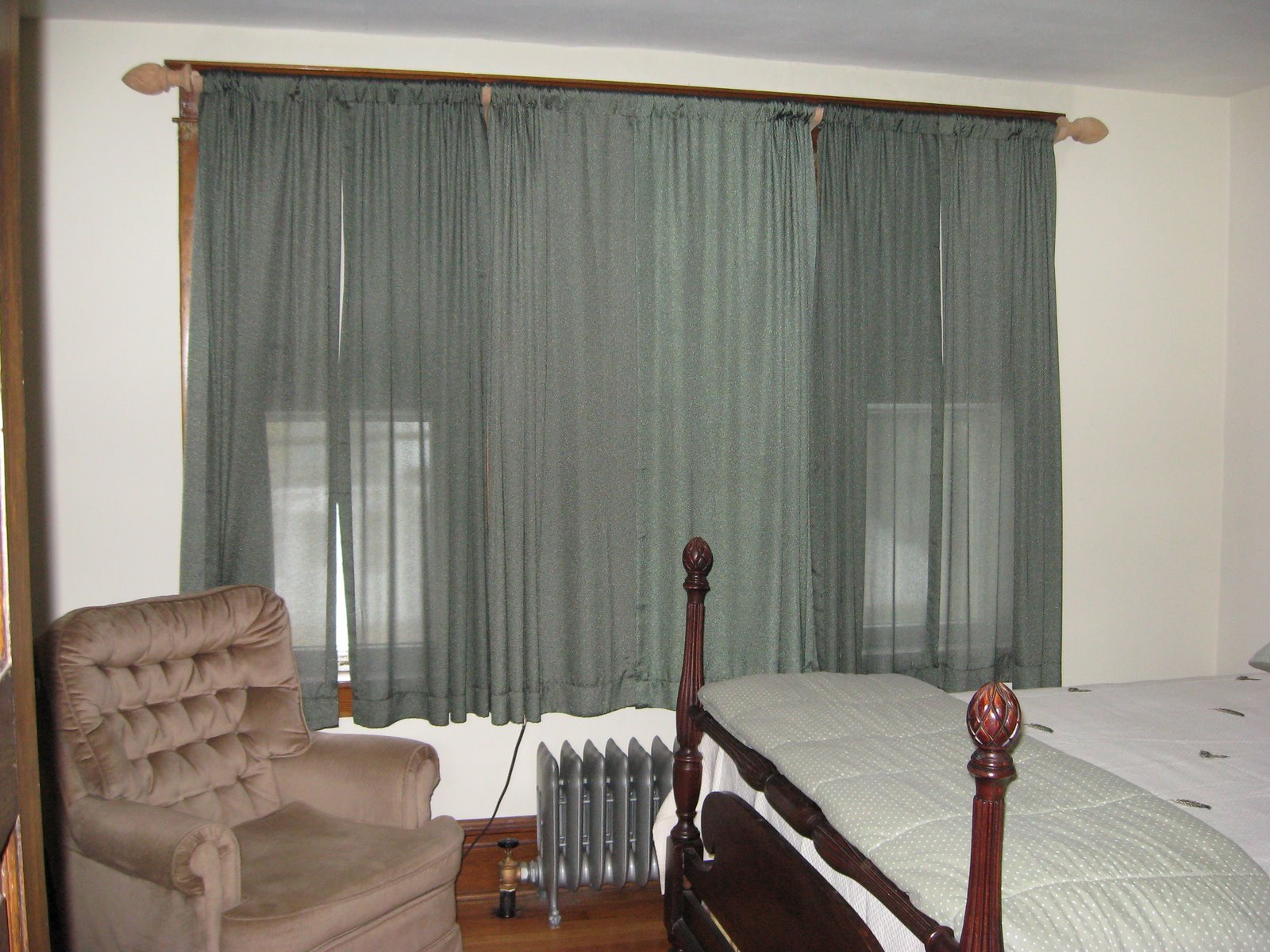
Now here we are, in September of 2008, five years after I bought the house. I need to make tiebacks for the curtains, which are a beautiful shimmery dress fabric, it has this 1940s deco look to it, and just has the loveliest drape. I bought these way back when I worked at Penney’s, and I have them in several colors. I just loved the fabric so much, I snagged them when they went on clearance, packed them away in a bin, and hoped I would have a place to use them someday. It is kind of funny, really. I think I always knew I wanted a house that had multiple windows per room. And this house sure does!
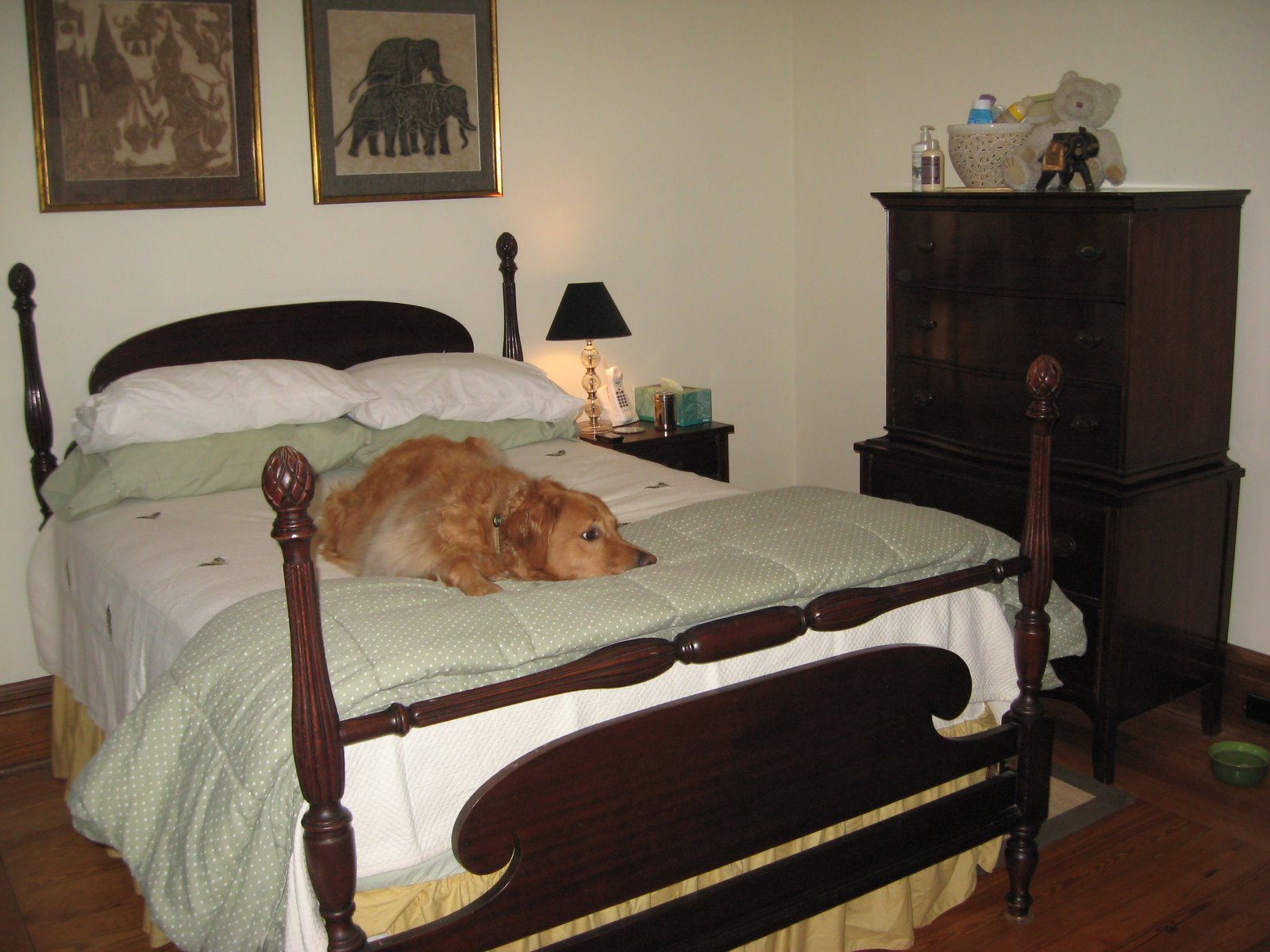
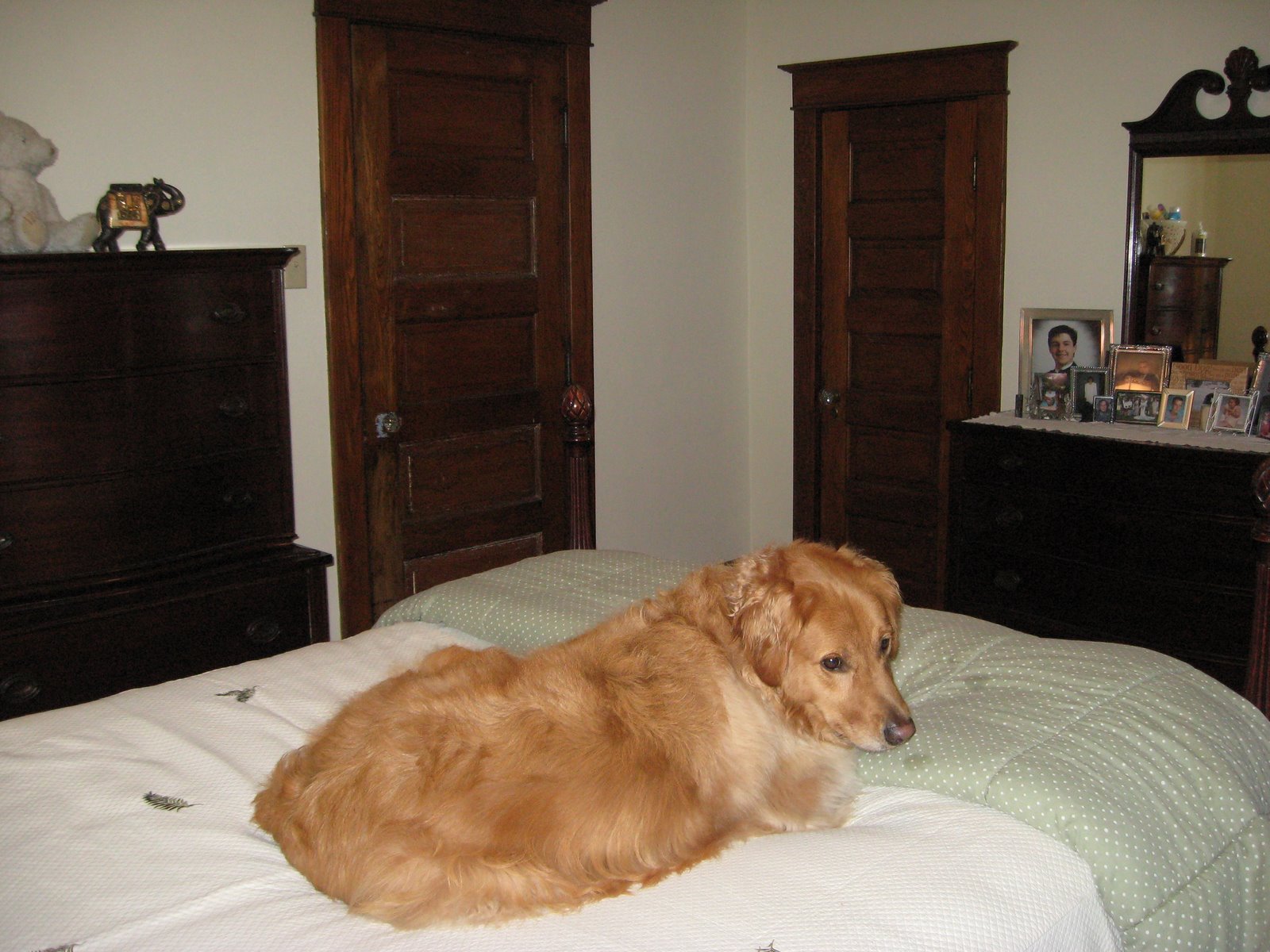
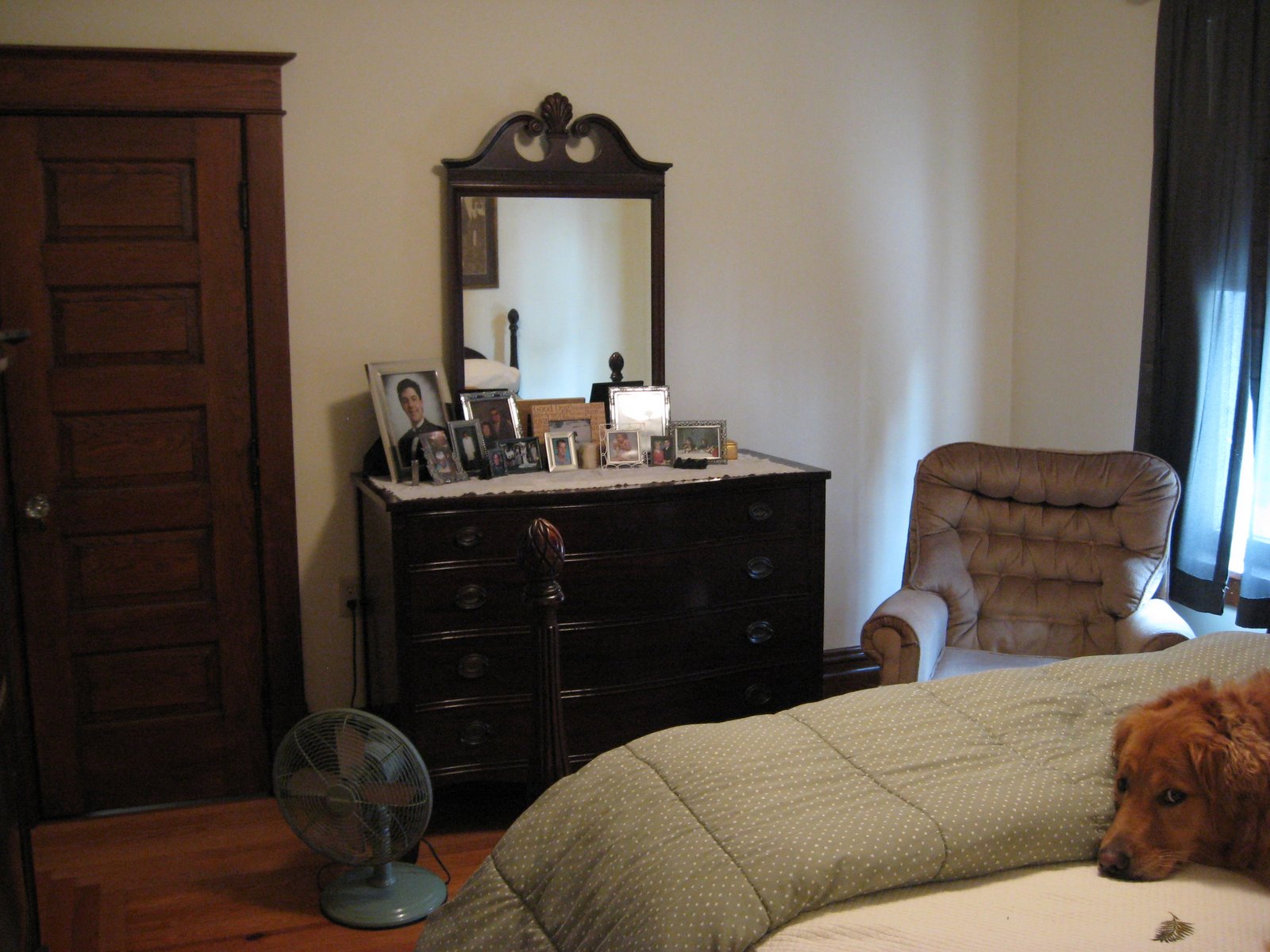
I still need to stain the curtain rod (a someday project), which is pieced together with parts from different places. I snagged the eight-foot pole from the clearance bin at Linens-n-Things. I chose the brackets from Country Curtains because they have a second notch behind the big one, in case I ever want to hang a second layer. And I ordered the pineapple finials from VanDyke’s. They are a pretty close match to the finial on the four-post bed.All of this beautiful furniture came from my Grandma Millie’s house. It is mahogany with a dark finish, and while they are not antiques, they are old. She got most of her furniture in the 40s, when she got married. I think my grandparents must have gone to the store and kitted out the living room, dining room, and bedroom all at once. The pieces are almost interchangeable, all the same wood and color, with similar styling. It certainly makes it easy to move things around. I intend to stick with the dark wood furniture, as you may have noticed from the recent yard sale buying frenzy.
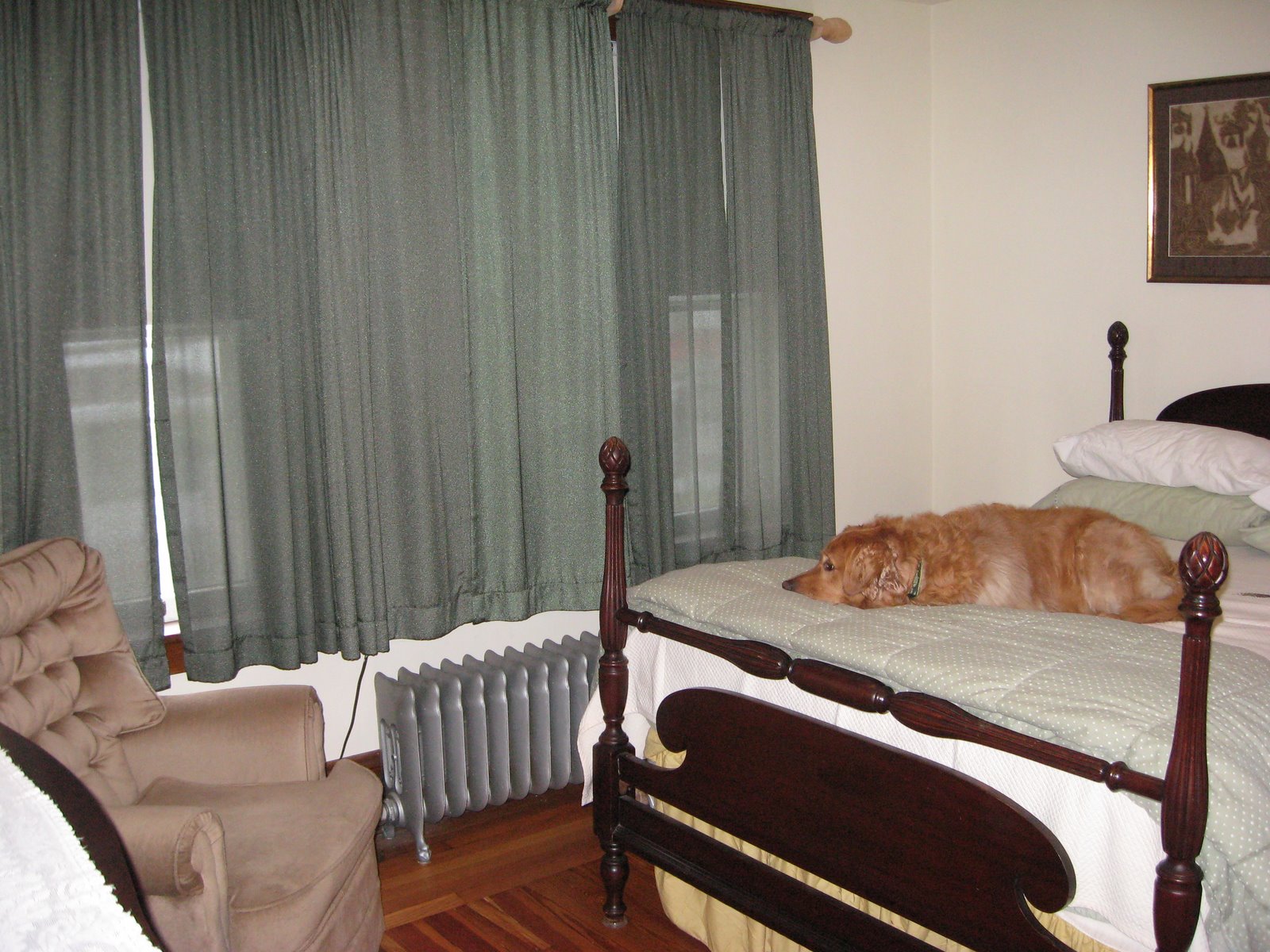
Oliver makes himself comfortable in my bed, but when we get tired of each other, he often settles in his comfy chair by the window.

You may have noticed the elephant theme. You see, while I’m not too wild about the Early American Colonial style, and this furniture is undoubtedly Colonial Revival. Reproductions. I’m trying to give it a little twist, going for a British Colonial feel. Think British India. Hence the elephants. Yeah. It still needs some work.
As for the room itself, the floors refinished beautifully, with few repairs needed, and the chestnut trim was cleaned and hydrated with Formby’s Deep Cleansing Build-Up Remover, followed by Formby’s Lemon Oil Treatment, which I use on all my furniture. Never Pledge, which causes a cloudy build up. Yuck. Always the Formby’s products.
Uncategorized

"& Trust" It’s in the Details

Most of the time our POs do stupid stuff. Quick fixes, shoddy work, it was never done to last.

Every once in a while, you get something neat, quirky, like this:
This is the door jam between Oliver’s room and the kitchen. At some point the door was removed, and they filled in the hinge spaces with bits of yardstick.
You wouldn’t belive how many yardsticks we have found while working on this house. They seemed to be tucked into every nook and cranny.
When Jack stripped this door frame down, and discovered this, he called me over to show me. You couldn’t tell before because the paint was glopped on so thickly that it filled the little grooves. I was so surprised. My first reaction was, drop jaw, “what on earth…”, then, “oh, brother, stupid POs”, and then… I smiled. It’s kind of cool. It is just something neat about the house. “Let’s leave it.” Jack said he would try to get all the paint off, but not sand it so much that you could no longer make out the markings. I think he did a good job. It isn’t something most people would even see, and most of the time I forget about it, walk right past it. But sometimes it catches my eye. And it makes me smile.

Uncategorized

Trimwork Question Answered

Recently, di asked…

“Hi again. Just curious: what color stain did you use on your trim, and what
species of wood is it? Thanks!”

Well di, all of the original wood trim and doors in the house are American chestnut. The few places where we had to replicate trim in a room full of chestnut, we used red oak. The floors are white oak with white pine centers.

As for the stain… the simple answer is that nearly every room is different. The long answer is that every room was made to match itself because of the variety of conditions. In some rooms the trim had been painted white, when this was stripped, there was some white paint that simply would not come out of the grain. So, what the guys did was to wipe a stain or dye on, and wipe it right back off. It stuck to the paint, leaving the rest of the wood mostly its original color.

In other rooms, the trim had been painted wild colors like lilac, mint green, and even black. Yes, black. We kept coming up with this black, tarry stuff as we stripped the living room and entry, including on the fluted columns. We might never have known if I hadn’t had a surprise visit from some ladies who grew up in the house around 1950-1970. They told me their mother was the first to paint the trim. She loved the mint green wall color she chose to go with the black trim. I can only assume this took place during the 60s. Anyway, these wild colors required a bit more work to get the wood back to a normal color. Different stains and dyes were mixed, and different combinations were used for different rooms. I’m sorry I don’t have a more definitive answer.